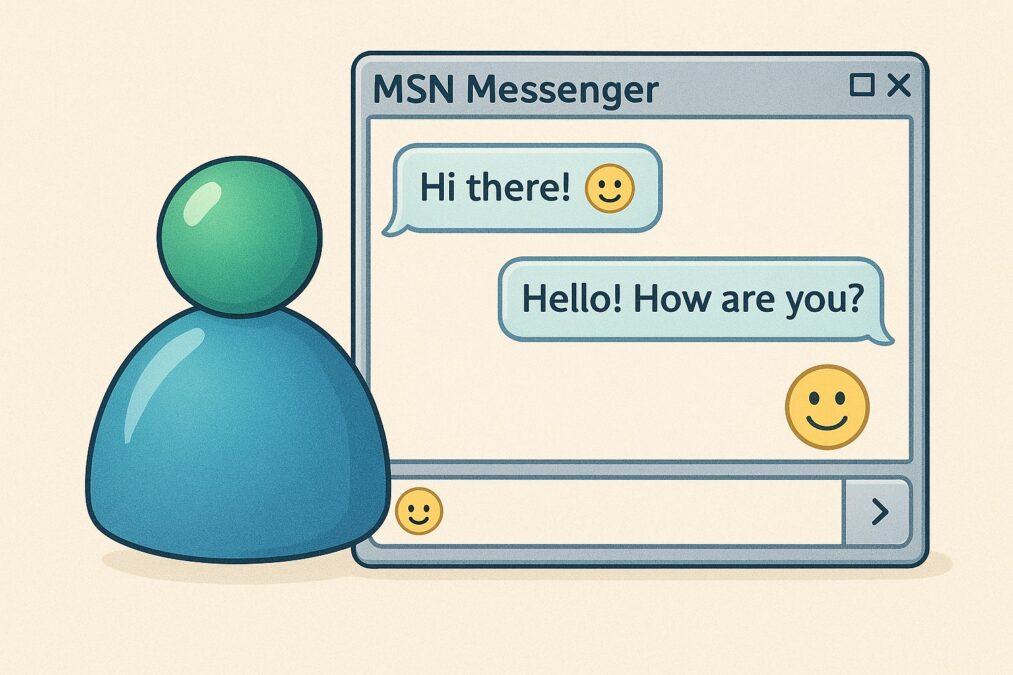
For millions of young people growing up in the early 2000s, MSN Messenger wasn’t just a chat app — it was the social center of their digital lives. The colorful cartoon interface, the iconic “ding” notification sound, custom display pictures, personal messages, and emoticons created an online social experience that defined a generation. This is the story of MSN Messenger and the era it shaped.
What Was MSN Messenger?
MSN Messenger (later rebranded as Windows Live Messenger) was Microsoft’s instant messaging application, first released on July 22, 1999. It was one of the first widely adopted consumer instant messaging platforms, competing with AOL Instant Messenger (AIM) for dominance in the market. Users needed a Microsoft/Hotmail account to sign in, and the service was integrated with Microsoft’s Hotmail email platform. At its peak around 2005-2009, MSN Messenger had over 330 million active users worldwide.
What Made MSN Messenger Special
Display Pictures and Personal Messages
Before Instagram profile pictures and Twitter bios, MSN Messenger gave users a small display picture (DP) and personal message space to express themselves. Choosing the perfect DP — often a carefully cropped photo or a popular anime character — was a significant social activity. Personal messages evolved into early forms of status updates, often containing song lyrics or cryptic messages aimed at specific friends or crushes.
Emoticons and Custom Emotions
MSN’s animated emoticons were iconic — from the original yellow smiley faces to the more elaborate animated ones in later versions. The custom emoticons feature (allowing users to create emoticons from their own images) was wildly popular. Typing (Y) for thumbs up or (L) for love, and seeing the animated result appear, was one of the distinctive joys of MSN conversations.
The “Nudge” and Typing Indicator
The Nudge feature — which shook the recipient’s entire MSN window with an attention-grabbing notification — became a cultural phenomenon. The typing indicator (“X is typing a message…”) introduced the now-universal feature of seeing when someone is composing a reply, creating a new kind of digital anticipation that is completely standard in modern messaging apps today.
Winks and Backgrounds
MSN Messenger allowed users to send “Winks” — full-screen animated cartoons that played in the chat window — and set custom conversation backgrounds to personalize the chat experience. These features represented early attempts at rich, expressive digital communication that modern apps like Snapchat and Instagram have taken to new levels.
MSN Messenger’s Social Impact
MSN Messenger transformed how teenagers and young adults socialized. For the first time, you could coordinate with your entire friend group simultaneously after school without making individual phone calls. “MSN-ing” became a verb. The app created social pressures unique to its era: the anxiety of seeing someone online but not responding to you, crafting the perfect personal message for your crush to see, and the elaborate social signals communicated through display names and personal messages. In many ways, MSN Messenger was the prototype for all of today’s social media dynamics — just in a smaller, more intimate circle.
The End of MSN Messenger
Microsoft rebranded MSN Messenger as Windows Live Messenger in 2006, adding features and improving the interface. However, the rise of Facebook (which offered messaging alongside social networking), smartphones (which made always-on messaging practical), and services like WhatsApp ultimately made dedicated instant messaging clients obsolete for most users. Microsoft officially shut down Windows Live Messenger in October 2014, migrating users to Skype. The service ended with surprisingly little fanfare, given how central it had been to a generation’s social lives.
MSN Messenger’s Lasting Legacy
Nearly every modern messaging concept can be traced back to MSN Messenger: typing indicators (now standard everywhere), read receipts, presence indicators (online/away/busy/offline), profile pictures and status messages, group conversations, file sharing within chat, and emoticons. The social behaviors MSN Messenger created — the anxiety of online presence, the pressure of digital communication, the social signals of status messages — set the template for every social platform that followed.
Frequently Asked Questions (FAQ)
Is there any way to use MSN Messenger today?
The original MSN Messenger servers are long gone, but nostalgia projects like Escargot have recreated a working MSN Messenger network where you can install original client versions and chat with others who share the same nostalgia. It’s a remarkable technical preservation project that lets you experience the original MSN interface authentically. Visit escargot.chat for details.
What replaced MSN Messenger?
Microsoft directed MSN Messenger users to Skype when the service closed. However, most former MSN users migrated to WhatsApp, Facebook Messenger, and later Snapchat, Instagram DMs, and Discord — each of which inherited different aspects of what made MSN Messenger appealing.
Share your favorite MSN Messenger memories in the comments! Whether it was the perfect personal message you crafted or the legendary Nudge wars, we’d love to hear your stories from the early social internet.