
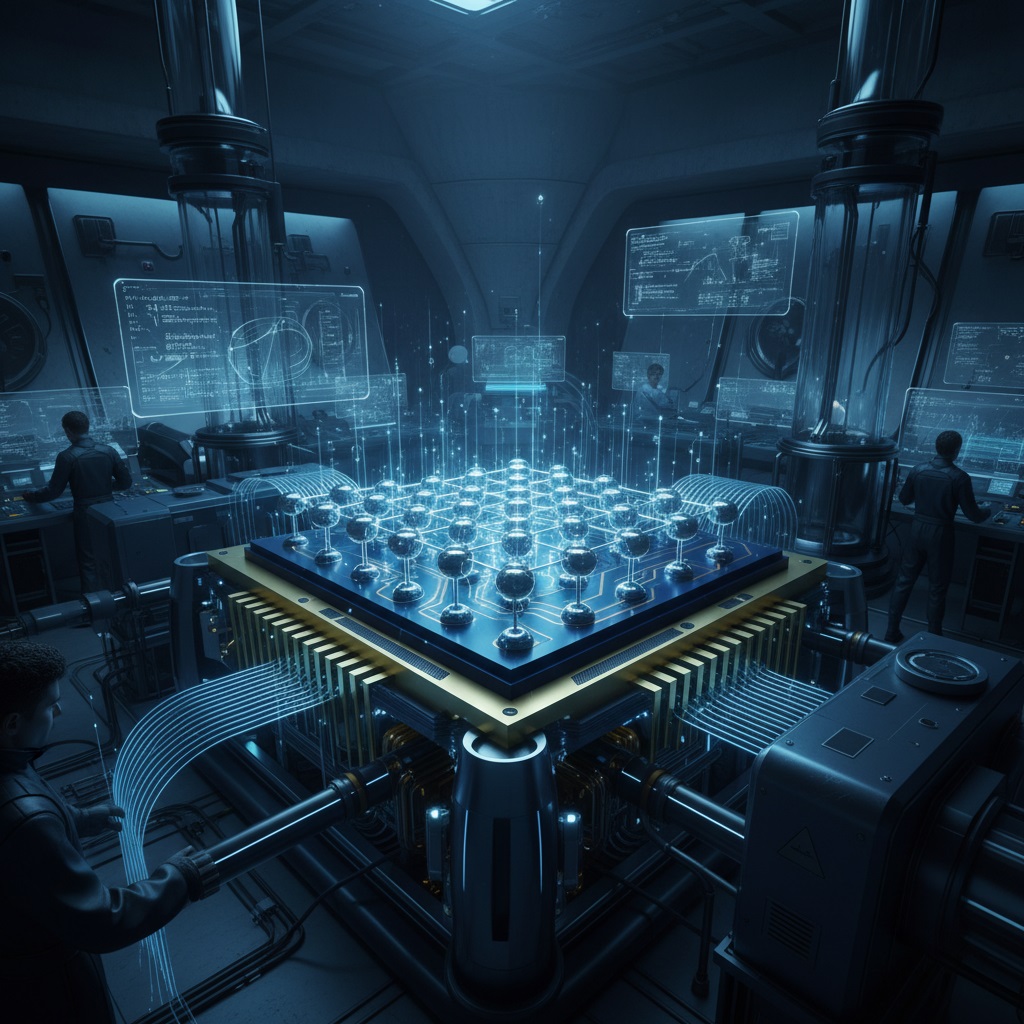
Quantum computing is often described as the future of computing, but for many people, it sounds confusing or even imaginary. Let’s break it down in a clear, human way, so anyone can understand what quantum computing really is — and whether it can ever sit inside your desktop or laptop like today’s CPUs.
What Is Quantum Computing?
Traditional computers (desktops, laptops, phones) work using bits.
- A bit can be 0 or 1
- Everything you do — emails, videos, websites — is processed using these 0s and 1s
Quantum computers work very differently.
They use quantum bits, called qubits.
A qubit can be:
- 0
- 1
- 0 and 1 at the same time
This special ability comes from quantum physics and is called superposition.
Simple Example to Understand the Difference
Normal Computer:
Imagine searching for a word in a book.
- You check one page at a time
Quantum Computer:
- You check many pages at the same time
That’s why quantum computers are extremely powerful for certain types of problems.
What Makes Quantum Computers Special?
Quantum computers use three key ideas:
1. Superposition
A qubit can exist in multiple states at once, allowing massive parallel processing.
2. Entanglement
Qubits can be linked together so that changing one instantly affects another — even at a distance.
3. Quantum Interference
Helps the computer cancel wrong answers and boost correct ones.
These features allow quantum computers to solve problems that would take classical computers thousands of years.
What Are Quantum Computers Used For?
Quantum computers are not for everyday tasks like browsing or gaming.
They are mainly used for:
- Drug discovery
- Climate modeling
- Financial risk analysis
- Cryptography and security
- Artificial intelligence research
- Complex scientific simulations
Can Quantum Computing Fit Into Desktop Computers Like CPUs?
Short answer: No — not currently, and not anytime soon.
Here’s why 👇
1. Size Problem
Quantum computers are:
- As big as rooms
- Filled with special equipment
- Not just a single chip like a CPU
2. Extreme Cooling Required
Qubits must be kept near absolute zero (−273°C).
This requires:
- Massive cooling systems
- Special refrigerators
- Zero vibration environments
Impossible for a desktop setup.
3. Fragile Nature
Quantum states are:
- Extremely sensitive
- Easily disturbed by heat, light, or movement
Even a tiny vibration can cause errors.
Will We Ever Have Quantum CPUs at Home?
Most likely scenario:
- Classical computers (your PC) will stay the same
- Quantum computers will live in data centers
- Users will access quantum power via cloud services
Just like you don’t own Google’s servers, you won’t own a quantum computer — but you may use one remotely.
How Quantum and Classical Computers Will Work Together
In the future:
- Your desktop CPU handles normal tasks
- Quantum computers handle special calculations
- Both work together through the internet
This is called hybrid computing.
Is Quantum Computing a Threat to Today’s Computers?
No. Quantum computers:
- Will not replace desktops
- Will not replace smartphones
- Will not replace CPUs
They are problem-specific machines, not general-purpose devices.
Final Thoughts
Quantum computing is real, powerful, and revolutionary — but it is not a replacement for your desktop computer.
Think of it like this:
- A CPU is a car (everyday travel)
- A quantum computer is a rocket (special missions only)
Both are important — but used for very different purposes.